Skip to content
As a BetterHelp affiliate, we receive compensation from BetterHelp if you purchase products or services through the links provided
We live in a loud, fast, and incredibly demanding world. It’s no surprise that the anxiety economy is booming. From the moment we wake up to the notification ding on our phones to the moment we try to shut our brains off at night, we are constantly looking for ways to decompress.
We buy tools to help us cope. We invest in heavy blankets that hug us back, eye masks that block out the chaos, and sensory toys that keep our restless hands busy. We tend to think of these items as soft, cozy, and simple. But if you look closer, these items are actually feats of engineering.
A stress-relief product is only as good as its construction. A weighted blanket that leaks glass beads into your bed isn’t relaxing; it’s a nightmare. A sensory cube that falls apart when a toddler tugs on it is a safety hazard. The unsung hero of the wellness industry isn’t the fabric or the filling; it is the stitching.
The manufacturers who build these tools understand that durability is the foundation of comfort. They rely on high-tensile commercial sewing thread and specialized techniques to turn raw materials into products that can withstand the physical demands of anxiety relief.
Here is a look at how the industrial sewing industry plays a silent, structural role in keeping us calm.
Weighted Blankets
The weighted blanket is perhaps the most popular stress-relief tool of the last decade. It works on the principle of “Deep Pressure Stimulation” (DPS), stimulating the production of serotonin and melatonin. But from a manufacturing standpoint, a weighted blanket is a logistical puzzle.
You are essentially trying to suspend 15 to 25 pounds of tiny glass or plastic beads evenly across a 60-inch surface. If you just poured the beads between two sheets of fabric, they would all slide to the corners, creating a lumpy, unusable sack.
Sewing is the solution. To make a weighted blanket work, the fabric must be quilted into hundreds of small, individual pockets, usually 4-inch or 6-inch squares. Each square must hold a precise amount of weight.
Every time you toss and turn in the night, that weight shifts, slamming against the stitch line. A standard cotton thread used for apparel would snap under this dynamic load. This is why professional weighted blankets are constructed with bonded nylon or polyester industrial threads. These threads have high abrasion resistance and tensile strength, ensuring that the grid holds its shape for years, keeping the weight exactly where it needs to be to provide therapy.
Sensory Toys
For children (and adults) with sensory processing disorders, ADHD, or high anxiety, tactile toys are essential. These soft cubes, taggies, and fidgets provide a physical outlet for nervous energy.
However, the way these items are used is aggressive. They are designed to be squeezed, pulled, chewed, and twisted.
The role of sewing here is two-fold: texture and safety.

- Texture: Makers often combine radically different fabrics—silky satin next to rough corduroy next to bumpy minky. Sewing these disparate materials together requires skill and the right tension settings to ensure the seams don’t pucker or bunch, which would ruin the tactile experience.
- Safety: This is critical. Many sensory toys are filled with crinkly paper, bells, or pellets. If a seam fails, the filling becomes a choking hazard. Industrial sewing machines use a lockstitch or a safety stitch that essentially knots the thread at every insertion point. This ensures that even if one loop breaks, the entire seam doesn’t unzip.
Aromatherapy Products
There is nothing quite like a lavender-scented neck pillow after a long day at a desk. These products usually contain a mixture of dried herbs (lavender, chamomile) and a thermal mass like rice, flaxseed, or buckwheat hulls.
The sewing challenge here is containment of fine particulates. Flaxseeds and dried herbs are tiny. If the stitch length on the product is too long (too few stitches per inch), the filling will leak out, leaving a trail of dust and seeds wherever you go.
Manufacturers have to dial in a tight, high-density stitch count to seal these products effectively. Furthermore, because these items are often microwaved or frozen, the thread itself must be thermally stable. It cannot melt in the microwave or become brittle in the freezer. Cotton-wrapped polyester threads are often the material of choice here, providing the strength of synthetic with the heat-tolerance of natural fiber.
The Psychology of the Seam
There is also a psychological component to how these products are sewn. When we are stressed, we look for tactile perfection. Our fingers subconsciously trace the edges of a blanket or a pillow.
A sloppy, uneven seam can be a source of irritation for someone with high sensory sensitivity. A raw edge that scratches the skin can ruin the soothing effect of a sleep mask.
High-quality stress relief products use finished seams.
- French Seams: Where the raw edge of the fabric is fully enclosed inside the seam itself, creating a smooth finish against the skin.
- Topstitching: A decorative and functional stitch on the outside of the item that lays the fabric flat and adds a layer of durability.
These details might go unnoticed by the eye, but they are felt by the hand. They communicate a sense of quality and security that allows the user to fully relax.
The Maker’s Meditation
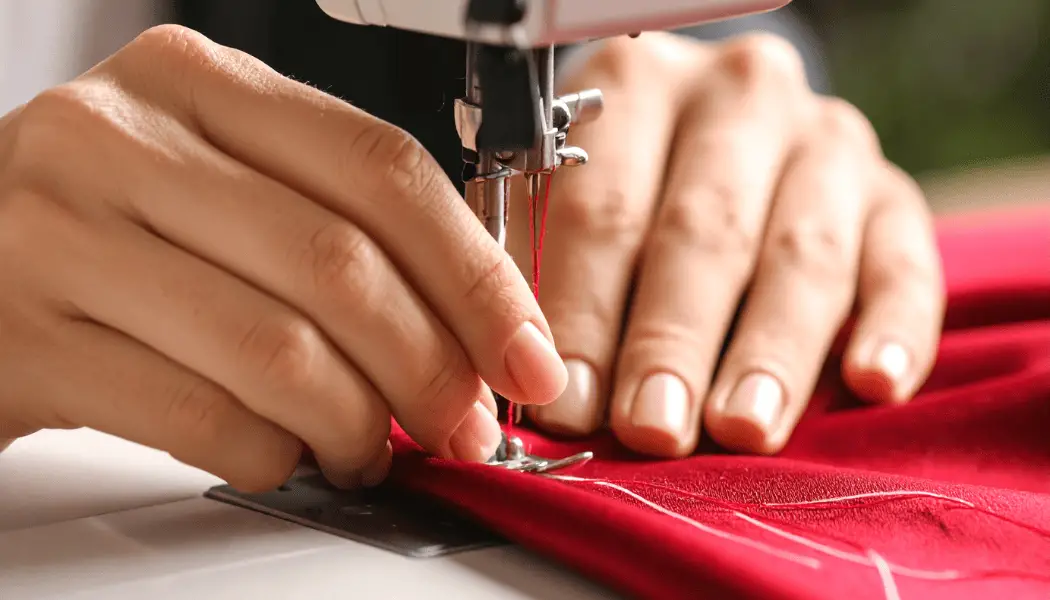
Finally, we can’t ignore the stress relief found in the act of sewing itself. For the DIY crowd, the hum of the sewing machine is a form of therapy.
There is a rhythm to it. Measuring, cutting, pinning, and stitching require a singular focus that blocks out the noise of the world. It is a flow state activity. When you are guiding fabric under the needle, you cannot be doom-scrolling on your phone or worrying about tomorrow’s meeting. You have to be present.
Whether it is a factory using industrial machines to produce thousands of anxiety-relief tools, or a hobbyist sewing a single quilt in their spare room, the thread is the common denominator. It is the literal tie that binds the materials together, turning loose fabric and filling into a vessel for comfort, safety, and peace.

- How Sewing Engineers Stress Relief Products - December 17, 2025
- Why Your Workout Is the Most Powerful Antidepressant You Can Buy - December 12, 2025
- How Switching to Solar Power Can Quiet Your Mind - December 8, 2025
This site contains affiliate links to products. We will receive a commission for purchases made through these links.