Skip to content
As a BetterHelp affiliate, we receive compensation from BetterHelp if you purchase products or services through the links provided
There is a distinct difference between a yard and an outdoor living space. A yard is a chore; it’s grass that needs mowing, weeds that need pulling, and a muddy patch where the dog runs. An outdoor living space, however, is a destination. It is the place where you exhale the moment you step out the back door.
We often attribute the relaxing nature of a garden to the plants—the rustling leaves, the blooming hydrangeas, the shade trees. While the greenery provides the atmosphere, the comfort comes from the structure. You can’t relax if your chair is sinking into the dirt or if you have nowhere to set your coffee. To build a true retreat, you have to start with the bones of the landscape.
By integrating high-quality hardscaping products like natural stone pavers, retaining walls, and architectural slabs, you provide the foundation for leisure. Hardscaping is what turns a wild plot of land into a functional extension of your home, allowing you to reclaim your weekend from the chaos of the outside world.
Here is how to use stone, concrete, and structure to curate a backyard designed specifically for decompression.
1. Defining Your Chill Zones with Texture and Shape
Open space can feel chaotic. If you walk onto a giant rectangle of grass, you don’t really know what to do with yourself. It feels exposed. Relaxation requires intimacy and definition.
Hardscaping allows you to zone your yard without putting up walls. You can use different textures and paver styles to create subconscious boundaries.
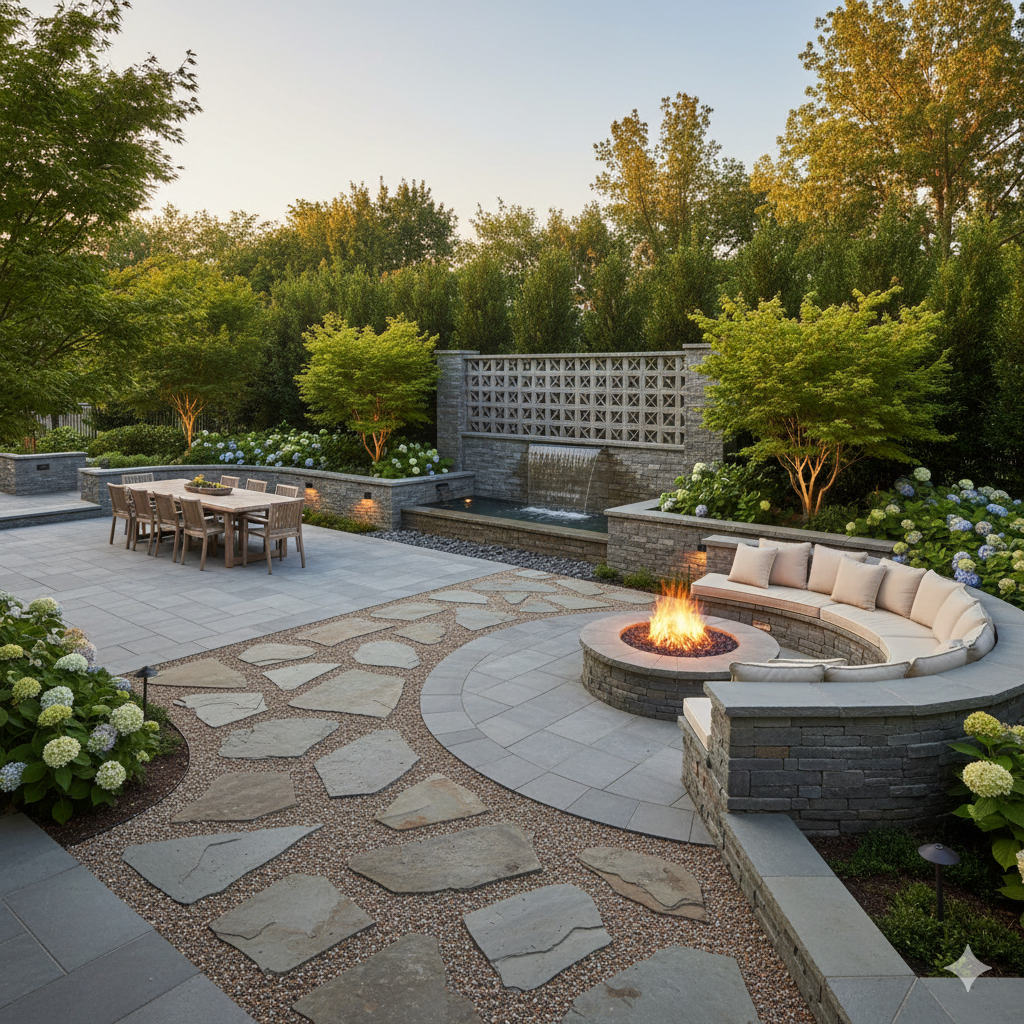
- The Dining Area: Use large, smooth slabs for the dining patio. It creates a stable, clean surface for tables and chairs, distinguishing it as the active social space.
- The Lounge Nook: Transition into a different material—perhaps a circular layout of cobblestones or a gravel path—to lead to a pair of Adirondack chairs in the corner.
By physically separating these areas with hardscaping, you create mental separation as well. You can have a loud area for the barbecue and a quiet, secluded area for reading, all within the same backyard. The path between them acts as a transition, allowing you to commute from the stress of the grill to the peace of the lounge.
2. The Psychology of Privacy: Walls and Screens
It is impossible to relax if you feel like you are on display. If your neighbors can see you eating dinner, or if you can see the traffic passing by on the street, your brain stays in alert mode.
This is where vertical hardscaping becomes your best friend. A simple privacy fence is functional, but a stone retaining wall or a decorative masonry screen adds an element of permanence and security that wood cannot match.
Consider a sunken patio design. By digging down just a foot or two and building low retaining walls around the seating area, you create a nest effect. You are physically lower than the surrounding grade, which instantly makes the space feel more private and protected. The stone walls can double as extra seating (capped with smooth coping) for parties, but their primary job is to hold the earth back and wrap you in a secure, quiet embrace.
3. Fire: The Ancient TV
There is something primal about staring into a fire. It lowers blood pressure and quiets the mind. In a digital world where we stare at screens all day, a fire feature provides a necessary analog escape.
A hardscaped fire pit is often the anchor of a relaxing outdoor space. Unlike a portable metal bowl that rusts and wobbles, a built-in stone fire pit suggests permanence. It says, “Sit down, we are staying a while.”

For maximum relaxation, consider the shape. A round fire pit encourages conversation and equality—everyone is facing the center. A linear, rectangular gas fire table offers a more modern, spa-like vibe. Whichever you choose, surround it with a wide hardscape apron. You want enough room to kick your feet back without your chair sliding off the edge of the patio. The crackle of the fire combined with the solid, cool feel of stone underfoot creates a sensory experience that grounds you in the moment.
4. Water: The White Noise of Nature
Silence is rare in the suburbs. You hear lawnmowers, AC units, and cars. To create a relaxing environment, you don’t necessarily need silence; you need masking.
Incorporating water features into your hardscape is the most effective way to drown out neighborhood noise. A stone fountain, a bubbling urn, or a sheer descent waterfall built into a retaining wall generates “pink noise”—a frequency that human brains find inherently soothing.
Hardscaping allows you to integrate these features seamlessly. Instead of a plastic pond liner that looks artificial, you can build a water feature that looks like it erupted from the earth. Using natural river rock and flagstone to frame a small stream or pond creates a visual and auditory cooling effect. Even on a hot July day, the sound of running water makes the patio feel ten degrees cooler.
5. The Relaxation of Low Maintenance
Finally, we have to talk about the work. Nothing kills a relaxing Saturday morning faster than the realization that you have to mow, edge, weed, and mulch before you can enjoy your yard.
A yard full of grass is a yard full of obligations. A yard utilizing smart hardscaping is a yard full of freedom.
By expanding your patio footprint or using decorative gravel and stepping stones in low-traffic areas, you drastically reduce the amount of organic maintenance required. Stone doesn’t need watering. It doesn’t get brown patches in a drought. It doesn’t need to be fertilized.
The most relaxing aspect of hardscaping is the time it gives back to you. When you look out your window and see a beautiful slate patio and a stone fire pit, you aren’t listing chores in your head. You are just thinking about which book you’re going to read out there.
Building Your Foundation for Peace
Creating a sanctuary isn’t just about buying comfortable cushions. It’s about shaping the environment. It’s about manipulating space, sound, and sightlines to trick your brain into slowing down.
Hardscaping provides the skeleton of this experience. It defines where you walk, where you sit, and what you see. Whether it’s the rugged texture of a cobblestone walkway slowing your pace or the solid security of a stone privacy wall, these elements work together to build a space that feels safe, permanent, and yours. So, pour the concrete, lay the stone, and get ready to finally exhale.

- The Sleep-Well Account: Why Your Nest Egg Is Actually a Mental Health Tool - February 25, 2026
- A Guide for Turning Your RV into a Sanctuary for Sleep - February 4, 2026
- High Stakes, Low Blood Pressure: How to Navigate the Chaos of Moving Hazardous Liquids - February 4, 2026
This site contains affiliate links to products. We will receive a commission for purchases made through these links.