Skip to content
As a BetterHelp affiliate, we receive compensation from BetterHelp if you purchase products or services through the links provided
There is a romanticized version of RV life that lives on Instagram. It features a cozy bed overlooking a mountain range, a steaming cup of coffee, and perfect serenity. Then, there is the reality.
You pull into a campground at 8:00 PM. The site next to you is having a loud campfire debate about politics. A diesel truck is idling three spots down. The streetlamp is shining directly into your bedroom window, and every time your partner rolls over, the entire trailer shakes like a mild earthquake.
For all their freedom and adventure, RVs are notoriously difficult places to get a good night’s sleep. They are, essentially, metal boxes with thin walls and minimal insulation. They heat up fast, cool down fast, and let sound travel through them as if the walls weren’t even there.
But you didn’t buy a camper to be exhausted. If you want to actually enjoy the hiking and the sightseeing, you need rest. Making an RV conducive to sleep requires a mix of structural upgrades and creature comforts. From upgrading the plastic seals on your doors to blackout strategies that rival a photography darkroom, here is how to engineer a better night’s rest on the road.
1. Seal the Sound Leaks
The biggest enemy of RV sleep is noise. Campground walls are thin, but the real issue is often the gaps in the vehicle’s envelope. Sound behaves like water; if air can get in, noise can get in.
Factory-standard RVs are often assembled quickly, and the weatherstripping around the entry doors, baggage doors, and slide-outs is usually basic. Over time, these seals compress and crack. If you can see daylight coming through the crack of your door, you are basically inviting the noise of the campground inside.
Upgrading your seals does double duty. High-quality bulb seals or EPDM rubber gaskets create a tighter compression when the door closes. This dampens vibration and blocks the airborne sound waves from the neighbor’s generator. It turns the rattle of a windy night into a dull thud, helping you stay asleep when the weather turns.
2. Covering the Light Leaks
RV manufacturers love windows. They love panoramic views. But at 5:30 AM in June, you will hate those windows.
Most RVs come with night shades, but these are rarely true blackout curtains. They leave massive gaps at the sides where the sun—or the campground security light—can pour in.
To fix this, you need to get aggressive with light control:
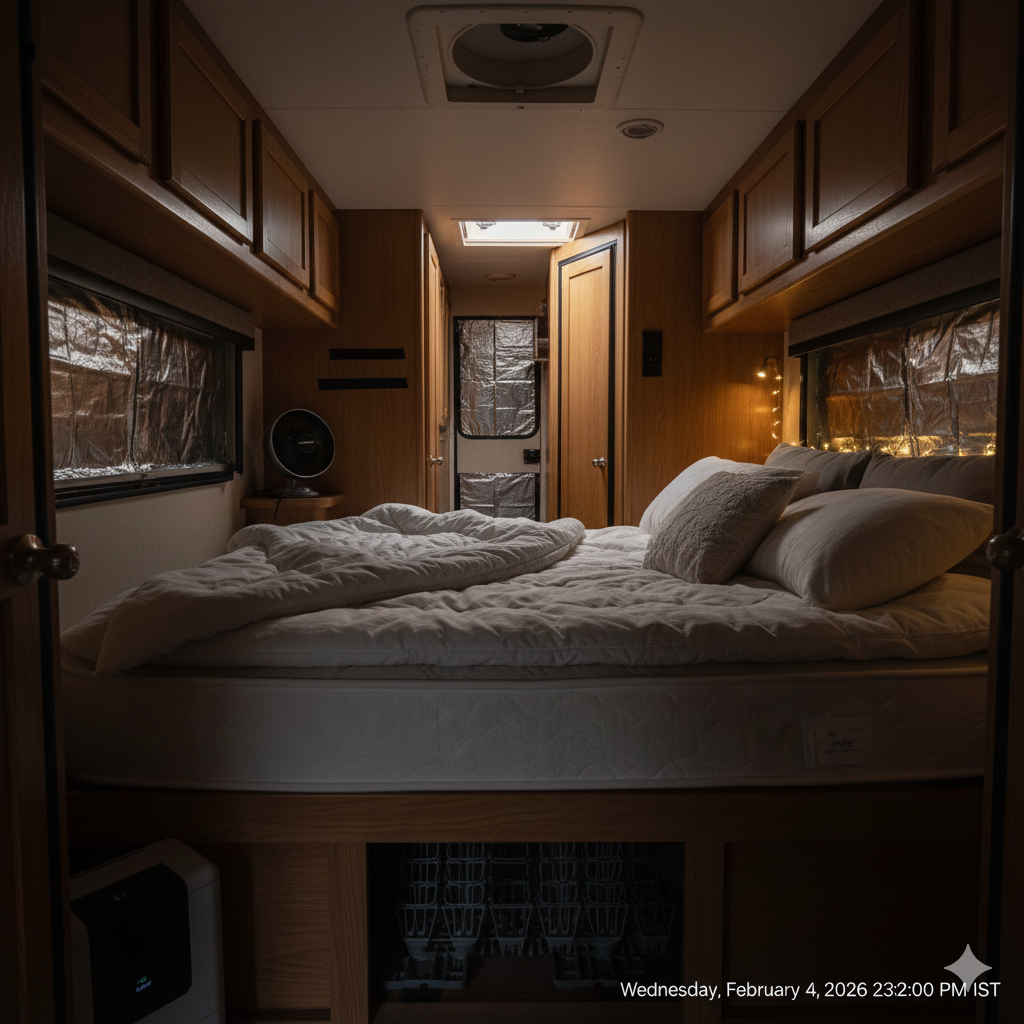
- Reflectix: This is the silver bubble wrap material you see in windshields. Cut pieces to fit your bedroom windows perfectly. It not only blocks 100% of the light but also reflects heat, keeping the bedroom cooler in the morning.
- The Skylight Situation: Almost every RV shower has a skylight. It acts like a spotlight beaming into the hallway or bedroom. Install a specialized skylight cover or stuff a foam vent pillow up there to block the morning glare.
- LED Tape: Don’t forget the electronics. RVs are filled with microwaves and stereos that have piercingly bright blue LED standby lights. A small piece of black electrical tape over these lights can make a surprising difference in the ambient darkness of the room.
3. Stabilize the Ship
Unless you are in a heavy Class A diesel pusher, your RV is going to move. It sits on a suspension system, meaning that every time someone gets up to use the bathroom or a dog jumps off the bed, the whole rig sways.
This seasickness sensation is a major sleep disruptor.

- X-Chocks: If you have a travel trailer or 5th wheel, wheel chocks that lock between the tires (X-Chocks) are essential. They stop the back-and-forth rocking motion.
- Stabilizer Jacks: Ensure your jacks are down firmly. If you are parked on soft ground or gravel, use jack pads (blocks of wood or plastic) to widen the footprint so the jacks don’t sink overnight, causing the rig to become wobbly by morning.
4. Fix the RV Mattress Problem
There is a running joke in the industry that the mattress provided by the manufacturer is just “plywood with fabric on it.” It is almost universally uncomfortable.
However, upgrading isn’t always as simple as buying a residential mattress. RV beds often have unique dimensions and weight limitations.
- Toppers: If you are on a budget, a 3-inch high-density memory foam topper can salvage a factory mattress.
- Froli Systems: One of the hidden issues with RV beds is that they sit on a solid plywood platform. This provides zero give and traps moisture (leading to mold under the mattress). The Froli sleep system is a set of plastic springs that interlock and sit under the mattress. They act like a box spring, allowing airflow and providing independent suspension for your hips and shoulders.
5. Temperature and Humidity Control
Sleeping in a house is easy because the central air keeps the temp at a steady 70 degrees. In an RV, the temperature can swing wildly.
If you are camping without hookups (boondocking), you likely can’t run the AC all night. This leads to a stuffy, humid room that makes deep sleep impossible.
- Roof Vent Covers: Install covers over your roof fans. This allows you to keep the vents open even when it is raining. Creating a cross-breeze by opening a window by the bed and running the roof fan on exhaust pulls cool night air across you without needing the AC.
- Dehumidifiers: If you have power, run a small dehumidifier. RVs trap moisture from your breath. Lowering the humidity makes the air feel cooler and lighter, which is much better for sleeping than the heavy, swampy air that builds up in a small space.
6. White Noise is Essential
Finally, accept that you cannot control your environment completely. You cannot silence the highway noise half a mile away or the coyotes howling at midnight.
Instead of fighting the noise, mask it. A mechanical white noise machine (which uses a real fan inside) is better than a digital recording. The physical whoosh of air covers a broader spectrum of sound frequencies. If you don’t have space for a machine, a simple 12-volt fan pointed away from you can create enough drone to drown out the sudden noises that trigger your brain to wake up.
Your RV should be your happy place, not a source of exhaustion. It takes a little bit of work to retrofit a camper for proper rest. You have to seal the gaps, block the sun, and cushion the bed. But once you dial in that environment, you get the best of both worlds: the adventure of waking up in a new place, and the energy to actually go out and explore it.

- The Sleep-Well Account: Why Your Nest Egg Is Actually a Mental Health Tool - February 25, 2026
- A Guide for Turning Your RV into a Sanctuary for Sleep - February 4, 2026
- High Stakes, Low Blood Pressure: How to Navigate the Chaos of Moving Hazardous Liquids - February 4, 2026
This site contains affiliate links to products. We will receive a commission for purchases made through these links.