Skip to content
As a BetterHelp affiliate, we receive compensation from BetterHelp if you purchase products or services through the links provided
Children’s bedrooms and play spaces must do more than provide a place to sleep: they must accommodate play, learning, storage of an ever-expanding collection of books and toys, and the growing independence that comes as children develop. Furniture for children’s spaces that responds to these changing needs, that is safe and durable enough for active daily use, and that creates an environment genuinely inspiring for a child, produces rooms that children love and that serve them well across the years of childhood.
At nanisweimaraners.com you will find children’s room furniture guides, kids’ space design resources, and practical advice covering beds, storage, study areas, and all the furniture choices that create rooms where children thrive.
Safety First: The Non-Negotiable Requirements
Children’s furniture must meet safety standards that go beyond those applied to adult furniture. Sharp edges and corners are a genuine hazard for young children who are learning to walk and who move quickly in small spaces; furniture for children’s rooms should have rounded edges or edge protection. Stability is critical: furniture that can tip if a child climbs it or pulls on it presents a serious risk. Dressers and wardrobes in children’s rooms should be secured to the wall with anti-tip fittings as a standard precaution.
The materials and finishes used in children’s furniture must be non-toxic and free from harmful chemicals. Children have closer and more prolonged contact with their furniture than adults, and they are more vulnerable to the effects of chemical exposure. Choosing furniture finished with low-VOC (volatile organic compound) paints and stains, and manufactured without formaldehyde-emitting composite boards, provides a safer environment for children.
Beds That Grow with Your Child
Children’s bed requirements change significantly over the years of childhood, from the cot that provides safe sleep for infants through the toddler bed, junior bed, and eventually a full-size single or small double as children approach adolescence. Buying furniture that adapts to these changing requirements reduces cost and waste compared to purchasing a new bed at each life stage.
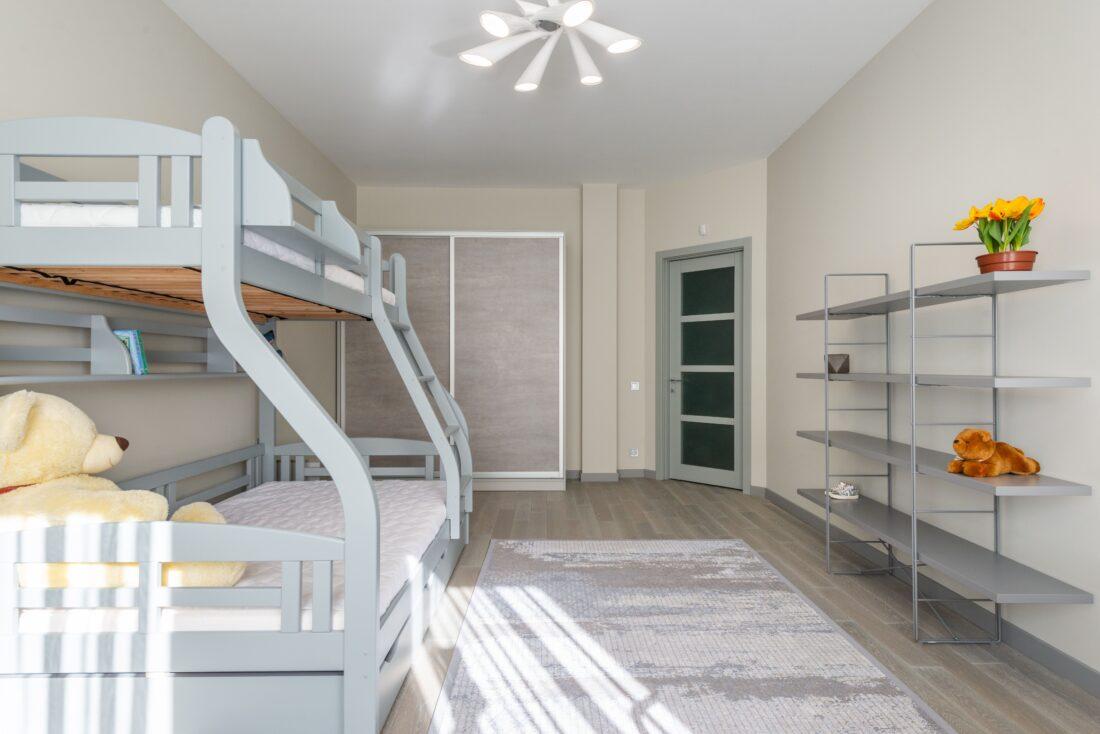
Mid-sleeper and high-sleeper beds, which raise the sleeping surface to create usable space beneath, are among the most efficient furniture solutions for children’s rooms. The space below can accommodate a desk and storage for a mid-sleeper, or a full additional sleeping area in a high-sleeper, making these configurations particularly valuable in smaller bedrooms.
Study Areas: Supporting Learning at Home
A dedicated, well-equipped study area in a child’s room provides the conditions for homework and reading that other locations in a busy household rarely deliver: quiet, adequate lighting, the right-height work surface, and storage for the books and stationery needed for the current year’s work. Children who have an appropriate study environment are more likely to develop the independent study habits that support academic progress.
The desk height should be matched to the child’s current size, with adjustable-height desks providing the most economical long-term solution. The chair should allow the feet to rest flat on the floor, the forearms to rest on the desk surface without the shoulders rising, and the back to be supported in a comfortable upright position.
Storage: Managing the Accumulation
The volume of toys, books, craft materials, and equipment that accumulates in a typical child’s room is remarkable, and designing adequate, accessible storage is one of the most important functions of children’s room furniture. Storage that requires significant effort to access will not be used by children; storage that is easy to reach and obvious to use will.
Open shelving at child-accessible heights, toy storage boxes with easy-lift lids, and deep wardrobe drawers for the clothing that increases in volume as children grow all contribute to a storage system that is genuinely used rather than worked around. Regular editing of the contents, donating outgrown toys, clothing, and books, is the ongoing practice that keeps even well-designed storage from becoming overwhelmed.

- When the Horse Is the Therapist - September 17, 2026
- The Government’s Numbers on the Psychology Career - September 17, 2026
- The Diagnoses That Imitate Dementia - September 17, 2026
This site contains affiliate links to products. We will receive a commission for purchases made through these links.